
Intermittent Fasting for Body Recomposition: Does It Work?
Intermittent Fasting for Body Recomposition: Does It Work?
Intermittent fasting (IF) has become one of the most popular dietary approaches for weight loss — but does it work for body recomposition specifically? The answer is: IF can absolutely support recomposition, but it's a tool for managing calorie intake, not a magic metabolic switch.
What Is Intermittent Fasting?
Intermittent fasting is not a diet — it's an eating pattern that alternates between periods of eating and fasting. The most popular protocols:
16:8: Fast for 16 hours, eat within an 8-hour window (e.g., 12pm–8pm). Most popular and accessible.
18:6: Fast for 18 hours, eat within a 6-hour window. More aggressive but effective for some.
5:2: Eat normally 5 days per week, restrict to 500–600 calories on 2 non-consecutive days.
OMAD (One Meal a Day): Extreme protocol. Not recommended for those prioritizing muscle building.
How IF Supports Body Recomposition
1. Simplifies Calorie Restriction
By limiting the eating window, IF naturally reduces calorie intake for many people. Instead of restricting what you eat, you restrict when you eat. This psychological simplicity improves adherence for many people.
2. Promotes Fat Oxidation
During the fasting window, insulin levels drop, triggering fat oxidation (fat burning) as the body switches to stored fat for fuel. This is especially pronounced in the later hours of a fast (12+ hours).
3. May Improve Insulin Sensitivity
Research shows IF can improve insulin sensitivity — meaning your cells become more responsive to insulin and better at directing nutrients toward muscle tissue (muscle glycogen replenishment and protein synthesis) rather than fat storage.
4. Potential Growth Hormone Benefits
Short-term fasting (16–24 hours) triggers significant growth hormone release. Growth hormone promotes fat oxidation and muscle preservation. Some studies show 5x higher GH levels after 24-hour fasts.
The Challenges of IF for Body Recomposition
Protein Distribution Problem
The biggest challenge IF creates for recomposition is protein distribution. Optimal muscle protein synthesis requires 30–45g of protein every 3–4 hours. Compressing your eating into 8 hours means fitting 4 protein-rich meals into a shorter window — possible but requires planning.
If you're eating 160g of protein per day in an 8-hour window (12pm–8pm):
- 12pm lunch: 45g protein
- 3pm snack: 35g protein
- 6pm dinner: 50g protein
- 8pm snack: 30g protein
This works, but requires deliberate effort.
Fasted Training Issues
If your training sessions fall in the morning (before your eating window opens), you're training in a fasted state. Research is mixed on whether fasted training reduces muscle gain, but many people notice performance impairment without pre-workout carbohydrates.
Solution: Schedule workouts either before the fast (evening training if on 12pm–8pm eating window) or break the fast 1 hour before training with a small protein + carb meal.
Not More Effective Than Regular Calorie Restriction (Just Different)
Head-to-head research consistently shows that IF and traditional calorie restriction produce equivalent fat loss and muscle retention when total protein and calories are matched. IF is not metabolically superior — it's a different adherence strategy.
Choose IF if: you're not hungry in the mornings, you tend to overeat when eating many small meals, or you prefer fewer, larger meals.
Avoid IF if: you feel ravenous by 8am, you work out in the morning, you struggle to eat enough protein in fewer meals, or it causes obsessive thoughts about food.
The Best IF Protocol for Body Recomposition
If you want to try IF for recomposition, the 16:8 protocol is the most sustainable and research-backed:
Eating window: 12pm–8pm (or 1pm–9pm for evening trainers)
Training: Schedule workouts within or just before the eating window
Protein target: 0.8–1.0g per pound of bodyweight, spread across 3–4 meals
Pre-workout (if training in eating window): Protein + carbs 1 hour before training
Post-workout: Protein + carbs within 2 hours of training
First meal: Should be high protein — Greek yogurt parfait, eggs + oatmeal, or a protein shake with fruit
IF Combined With Other Nutritional Strategies
IF pairs well with:
- Mediterranean eating style: High-protein, anti-inflammatory foods within the eating window
- Carb cycling: Lower carbs on fasted rest days, higher carbs on training days within the eating window
- Meal prep: Preparing all meals for the eating window in advance
For the right meal plan to use with or without IF, visit our nutrition page or read our full body recomposition diet guide.
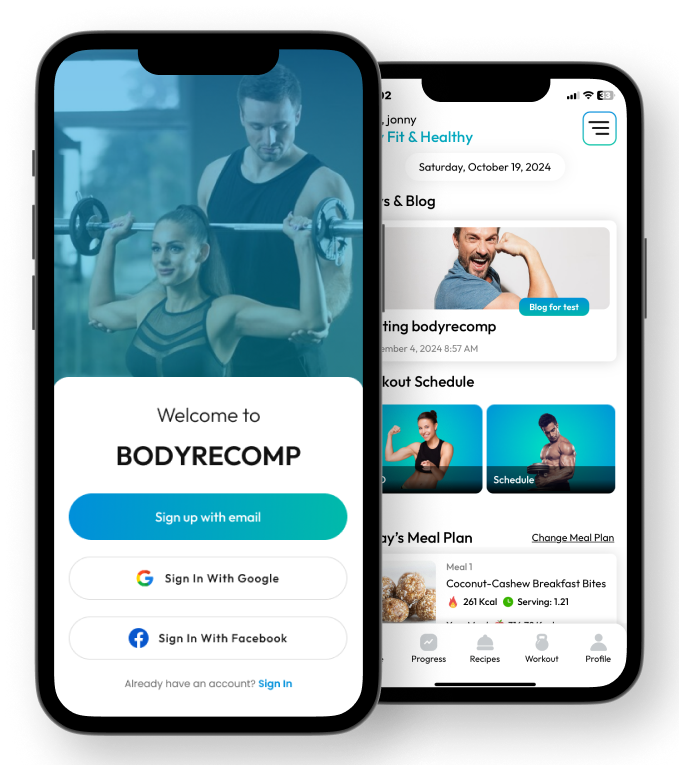
The BodyRecomp app lets you choose your preferred meal timing approach and adjusts your daily meal plan accordingly.
Ready to start your body recomposition journey? Download BodyRecomp — the app that gives you personalized workouts and meal plans built around your exact goals.
Start Your Transformation Today
Get a personalized workout program and meal plan built around your exact goals. Free to download — no credit card required.