
Best Meal Plan for Body Recomposition (With Examples)
Best Meal Plan for Body Recomposition (With Examples)
Your meal plan is the engine that powers body recomposition. Train as hard as you like, but if your nutrition is off, you will not see optimal results. The good news: eating for body recomposition doesn't require complicated recipes, expensive foods, or constant calorie counting. It requires getting the fundamentals right consistently.
Here is the complete framework, plus a sample 7-day meal plan you can start using today.
The Core Principles of a Recomposition Meal Plan
1. High Protein at Every Meal
Protein is the most critical variable in your diet. It drives muscle protein synthesis, blunts hunger, and has the highest thermic effect of any macronutrient (meaning you burn more calories digesting it).
Target: 0.8–1.1g of protein per pound of bodyweight per day.
For a 160-lb person, that's 128–176g of protein daily. Spread across 4 meals, that's 32–44g per meal — very achievable.
Best protein sources:
- Chicken breast (31g per 100g)
- Canned tuna (25g per 100g)
- Greek yogurt, plain (17g per 170g)
- Cottage cheese (14g per 100g)
- Eggs (6g each)
- Salmon (25g per 100g)
- Lean ground beef (26g per 100g)
- Tempeh (19g per 100g) — great for plant-based
2. A Moderate Calorie Deficit
To lose fat, you need to eat fewer calories than you burn. But the deficit must be moderate — too large and you'll lose muscle; too small and fat loss stalls.
Target: 250–400 calories below your TDEE.
Rough TDEE estimates:
- Sedentary (desk job, little movement): bodyweight × 14
- Moderately active (training 3x/week): bodyweight × 16
- Very active (training 5–6x/week): bodyweight × 18
A 175-lb moderately active person has a TDEE of approximately 2,800 calories. Their recomp target would be 2,400–2,550 calories.
3. Strategic Carbohydrate Timing
Carbohydrates are not your enemy. They fuel your workouts and support recovery. The key is timing.
Pre-workout (1–2 hours before): Moderate-carb meal to fuel performance Post-workout (within 2 hours): Carb + protein meal to restore glycogen and support recovery Evening: Lower-carb options if activity was low
Good carbohydrate sources: oatmeal, sweet potato, brown rice, quinoa, fruit, beans, whole grain bread.
4. Healthy Fats for Hormones
Don't neglect fat. Dietary fat is essential for testosterone production (which supports muscle building) and overall hormonal health. Aim for 25–35% of calories from fat.
Best fat sources: avocado, olive oil, nuts, salmon, eggs.
Sample 7-Day Body Recomposition Meal Plan
Based on approximately 2,400 calories, 175g protein, 230g carbs, 80g fat.
Day 1 (Training Day)
Breakfast: 5 scrambled eggs + 1 cup oatmeal with berries + black coffee Lunch: 6 oz grilled chicken breast + 1 cup brown rice + large green salad with olive oil Pre-workout snack: 1 banana + 1 scoop whey protein Dinner: 6 oz salmon + 1 cup roasted sweet potato + steamed broccoli Evening snack: 1 cup cottage cheese + cucumber slices
Day 2 (Rest Day)
Breakfast: 3-egg omelette with spinach and feta + 1 slice whole grain toast Lunch: Tuna salad (canned tuna, Greek yogurt, celery) + whole grain crackers + apple Dinner: 6 oz lean ground beef stir-fry with vegetables + 1/2 cup brown rice Snack: Greek yogurt with walnuts
Day 3 (Training Day)
Breakfast: Protein smoothie (2 scoops whey, 1 cup frozen berries, 1 cup almond milk, 1 tbsp almond butter) Lunch: Turkey and avocado wrap with whole grain tortilla + side salad Pre-workout snack: Rice cakes + cottage cheese Dinner: 6 oz chicken thighs (skinless) + quinoa + roasted vegetables Evening snack: Casein protein shake or cottage cheese
Days 4–7
Follow a similar pattern rotating protein sources (beef, fish, chicken, eggs, legumes) and carb sources (sweet potato, rice, oats, quinoa). The key is consistency, not perfection.
Adjusting Your Meal Plan Over Time
Your body adapts. Every 3–4 weeks, reassess:
- If you're losing weight faster than 1 lb/week: add 100–200 calories (mostly carbs)
- If weight hasn't moved in 2+ weeks: remove 100–200 calories
- If strength is dropping: increase protein or add calories
Different Meal Plan Styles That Work for Recomposition
Not everyone wants the same foods. All of these eating styles work for body recomposition when protein and calorie targets are met:
- High protein: Easiest to implement, most evidence-based
- Mediterranean: Excellent long-term sustainability
- Keto: Works but requires careful protein management
- Plant-based/Vegan: Works with proper protein planning (legumes, tempeh, seitan)
- Intermittent fasting: Can help with adherence for some people
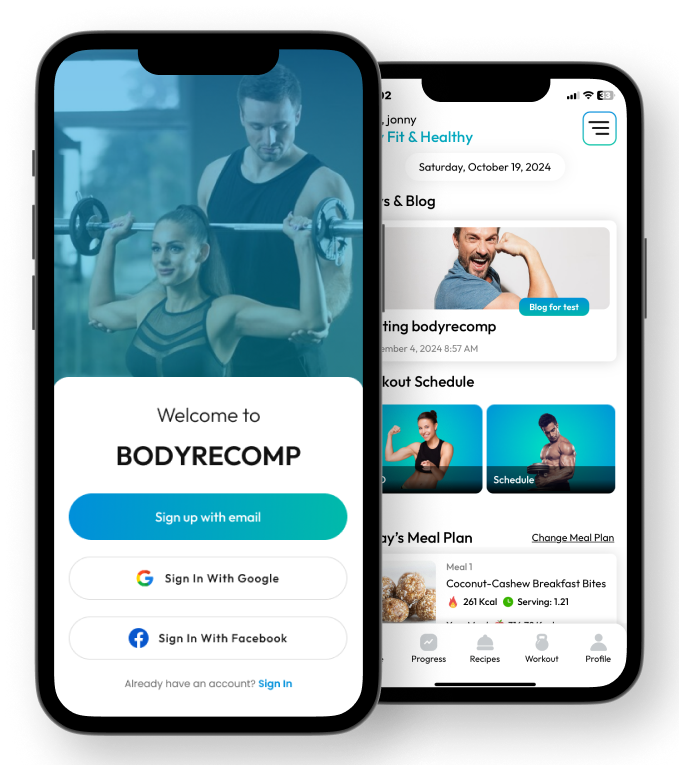
The BodyRecomp app lets you choose your preferred meal plan style and automatically adjusts your daily calorie and macro targets. Explore our nutrition page for more detail on each approach.
The Bottom Line
The best meal plan for body recomposition is one you'll actually stick to. Prioritize high protein, maintain a moderate deficit, time carbs around workouts, and stay consistent over months — not days.
For more guidance on specific nutrients, read our post on protein intake for body recomposition.
Ready to start your body recomposition journey? Download BodyRecomp — the app that gives you personalized workouts and meal plans built around your exact goals.
Start Your Transformation Today
Get a personalized workout program and meal plan built around your exact goals. Free to download — no credit card required.