
Body Recomposition Without Counting Calories: Is It Possible?
Body Recomposition Without Counting Calories: Is It Possible?
Calorie counting produces the most consistent, measurable body recomposition results. But for many people, tracking every gram of food causes anxiety, stress, and an unhealthy relationship with eating. The good news: body recomposition is absolutely possible without strict calorie counting — if you apply the right alternative strategies.
Why Calorie Counting Works (and Why It's Not Required)
Calorie counting works because it creates awareness. When people track calories, they typically:
- Reduce portion sizes unconsciously
- Make higher-protein choices to stay within their targets
- Become aware of "hidden" calories in dressings, oils, and drinks
- Hold themselves accountable to their plan
But you can achieve all of these outcomes WITHOUT tracking, using the strategies below.
Strategy 1: The Protein-First Approach
Instead of tracking all macros, track only one thing: protein.
Why this works: Protein is the most satiating macronutrient. Prioritizing protein at every meal naturally reduces overall calorie intake without restriction. Studies consistently show that people who eat high-protein diets consume fewer total calories spontaneously — without intentional calorie reduction.
Implementation:
- Eat a protein source at every meal (eggs, chicken, fish, Greek yogurt, cottage cheese, legumes)
- Aim for at least 30g of protein per meal
- If you feel hungry between meals, default to a protein snack (Greek yogurt, hard-boiled eggs, protein shake)
Strategy 2: The Plate Method
Instead of measuring grams, use your plate as a visual guide:
For training days:
- Half the plate: non-starchy vegetables (broccoli, spinach, peppers, zucchini, salad)
- One quarter: protein (chicken, fish, eggs, legumes)
- One quarter: complex starch (brown rice, sweet potato, quinoa)
- Plus: 1 thumb-size serving of healthy fat (avocado, olive oil, nuts)
For rest days:
- Half: vegetables
- One third: protein
- Remaining: starch reduced, fat maintained
This naturally creates an appropriate calorie level and macro balance without tracking a single number.
Strategy 3: Structured Meal Templates
Create 5–7 meals that you know work (high protein, appropriate calories) and rotate through them. Once you've built these templates (ideally by tracking for 2–4 weeks to calibrate), you can eat from them indefinitely without further tracking.
Sample template structure:
- Breakfast: Eggs (3) + oatmeal (1/2 cup dry) + fruit → ~500 cal, 30g protein
- Lunch: Chicken breast (6 oz) + rice (1 cup cooked) + salad → ~480 cal, 45g protein
- Dinner: Salmon (6 oz) + sweet potato (1 medium) + broccoli → ~520 cal, 38g protein
- Snack: Greek yogurt (1 cup) + mixed berries → ~180 cal, 18g protein
Total: ~1,680 cal, 131g protein — adjust template sizes based on your body size
Strategy 4: Hunger and Satiety Awareness
Your body has hunger and fullness signals — the problem is most people have learned to ignore or override them. Rebuilding connection to these signals takes practice:
Hunger scale: Rate your hunger from 1 (starving) to 10 (painfully full). Aim to start eating at 3–4 and stop at 6–7.
Eat slowly: Put utensils down between bites. Your stomach sends fullness signals to your brain with a 15–20 minute delay. Eating quickly lets you override satiety signals before they arrive.
Remove distractions while eating: Eating while watching TV, scrolling your phone, or working significantly increases calorie intake because you're not paying attention to satiety cues.
Strategy 5: Environmental Design
Make healthy choices the default:
- Keep protein-rich foods visible and accessible: Greek yogurt front of fridge, hard-boiled eggs pre-peeled in a container, protein bars in a bowl on the counter
- Remove hyperpalatable foods from home: Chips, cookies, and processed snacks are engineered to override satiety. Not having them removes the decision entirely.
- Prep meals in advance: Full bowls or portioned containers in the fridge make the high-protein choice the easiest choice
- Use smaller plates: Research consistently shows plate size influences portion sizes chosen
When Calorie Counting IS Worth Doing
Even if you prefer not to count long-term, consider a brief tracking period (2–4 weeks) at the start of your recomposition journey to:
- Calibrate your portion sizes to your targets
- Learn the protein content of your usual foods
- Identify where hidden calories are coming from
After this calibration period, you'll have the dietary intuition needed for effective no-count recomposition.
Realistic Expectations
Body recomposition without calorie counting is possible but may be slightly slower and less precise than with tracking. The tradeoff:
- Calorie counting: faster results, more accurate, requires effort
- No counting (with the strategies above): slightly slower, sustainable long-term, less cognitive load
Both are legitimate approaches. Choose the one you'll actually maintain for 6+ months.
For more guidance on building your nutrition strategy, read our best meal plan for body recomposition or visit our nutrition page for meal plan options.
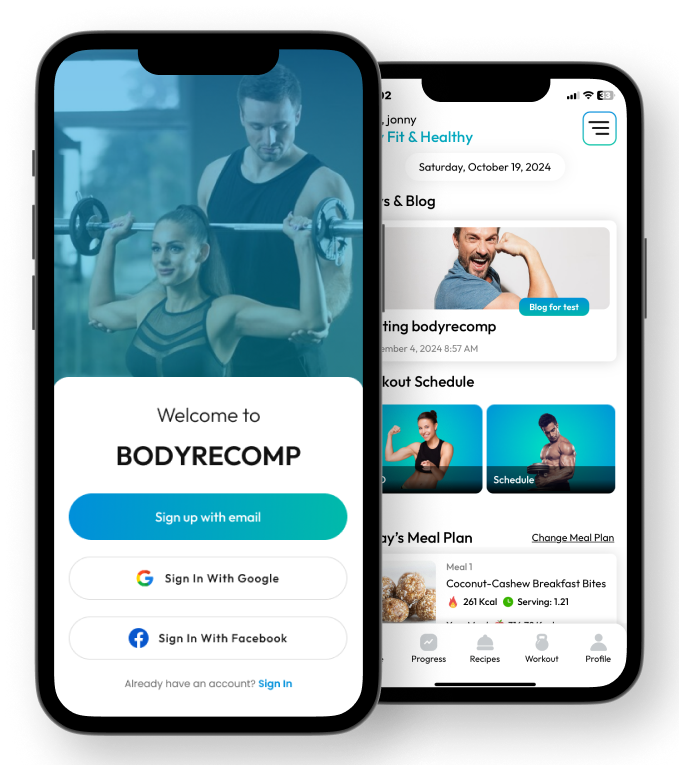
The BodyRecomp app handles your calorie and macro calculations automatically — so you get tracking benefits without manual counting. The app tells you what to eat, not just how many calories to hit.
Ready to start your body recomposition journey? Download BodyRecomp — the app that gives you personalized workouts and meal plans built around your exact goals.
Start Your Transformation Today
Get a personalized workout program and meal plan built around your exact goals. Free to download — no credit card required.